The “Dirty Dozen” refers to a group of fruits and vegetables that tend to carry higher levels of pesticide residue compared to others. This doesn’t mean these foods are unsafe or should be avoided altogether — many of them are nutritious staples. Rather, the list exists as a practical guide to help people make more informed choices when shopping.
Because these crops are often grown with multiple pesticide applications and have surfaces that readily absorb or retain residues, they are more likely to contain traces even after washing. Keeping the Dirty Dozen in mind can be especially helpful when deciding which items might be worth purchasing organic, particularly if you are shopping on a budget or buying produce frequently.
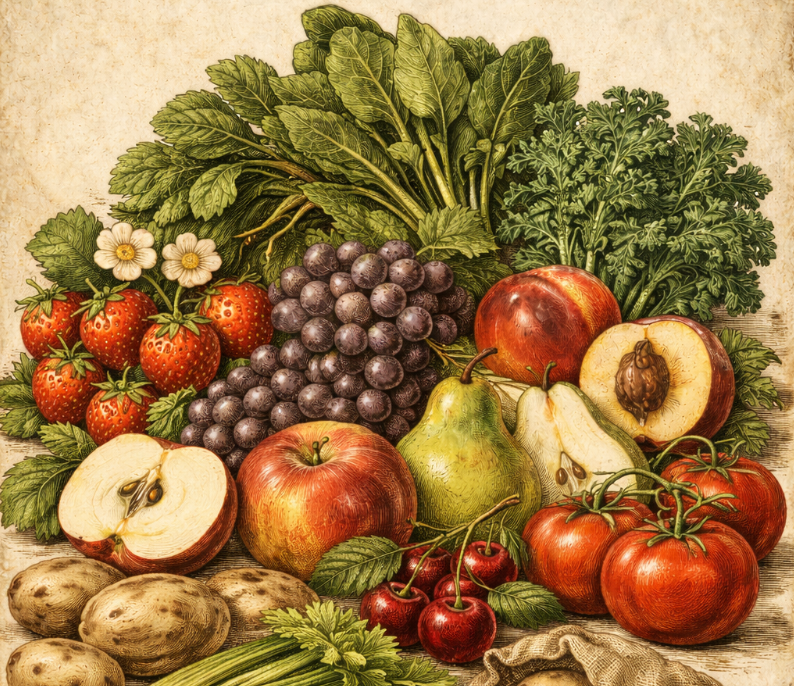
The goal isn’t perfection or fear, but awareness. Understanding the Dirty Dozen allows you to prioritize where organic choices may have the greatest impact, while still enjoying a wide variety of fruits and vegetables as part of everyday life. They are listed as follows.
- Strawberries
- Kale
- Spinach
- Grapes
- Nectarines
- Peaches
- Cherries
- Potatoes
- Tomatoes
- Pears
- Apples
- Celery
*This information is mostly for my own reference. Please do your own research and consult your doctor for your own health.*